Barjeel Fashion Barjeel Fashion

How to Wash Sportswear Without Ruining It?

Time:2026-11-13 Author:Ethan
0%

Sportswear is built to stretch, wick sweat, and move with you. Washing it carelessly can leave leggings limp, elastic waistbands loose, and technical shirts holding onto odor. The damage often starts with small habits: hot water, crowded loads, fabric softener, or a tumble dryer running too long. A better routine protects the fabric without turning laundry into a science project.

Textile Exchange’s 2024 Materials Market Report estimates that global fiber production reached 124 million tonnes in 2023, with polyester accounting for 57 percent. Since many activewear fabrics contain synthetic fibers, washing choices matter beyond appearance. The European Environment Agency’s 2022 briefing, Microplastics from Textiles, identifies laundering as one pathway for synthetic fibers to enter the environment. That is useful context, though it does not mean every garment sheds equally. Check the care label. It is the best starting point for garment-specific advice.

This guide explains how to wash sportswear without ruining it, from sorting sweaty kit to choosing water temperature and drying methods. You’ll learn why inside-out washing can help protect prints, when a mesh bag makes sense, and why fabric softener may interfere with moisture-wicking finishes. Small changes count. Still, no wash routine is perfect; fabrics wear out, and labels can be vague. The aim is to reduce avoidable damage while keeping your gear clean, comfortable, and ready for the next session.
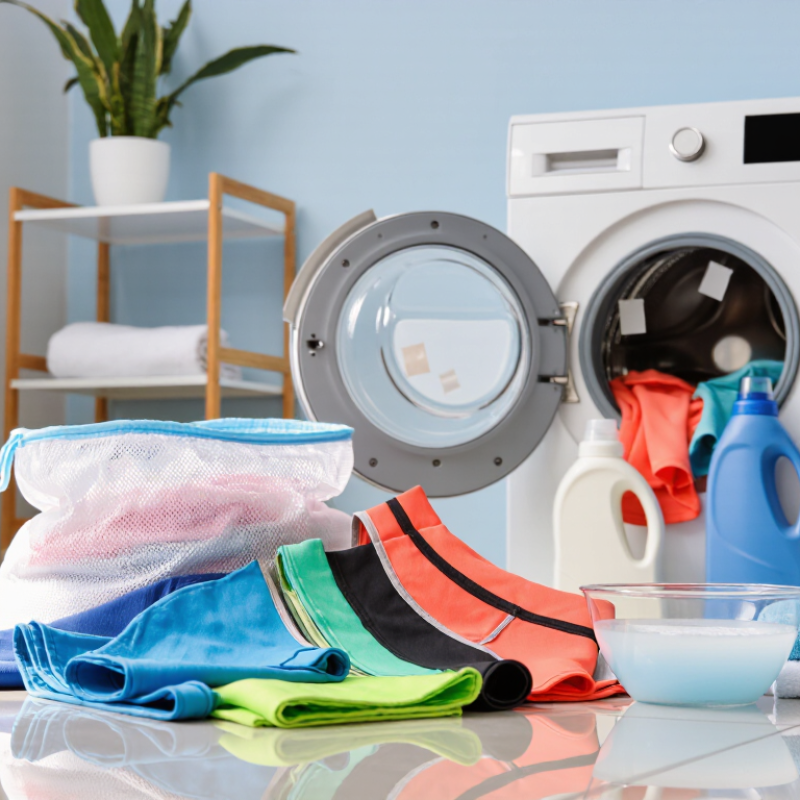
How to Wash Sportswear Without Ruining It?

Check the Fabric and Care Label

Before washing sportswear, check the care label in good light. Small symbols can change the whole routine. Read the fiber list too: polyester, nylon, elastane, and cotton blends respond differently to heat and friction. A stretchy waistband may look sturdy, but high heat can weaken its recovery over time. Read every line.

Treat the listed washing temperature as a limit, not a target to exceed when clothes smell stale. If machine washing is allowed, use a mild cycle and avoid crowding the drum; garments need room to rinse. Read the drying instructions just as carefully. Some synthetic fabrics dry quickly on a rack, while heat may damage elastic fibers or printed details. That matters.

Look for warnings such as “do not tumble dry,” “do not iron,” or “wash inside out.” Turning garments inside out can reduce rubbing against zippers and rough seams. I used to treat all workout tops alike; that was an easy mistake to make. When two care labels differ, follow the more restrictive instruction instead of guessing. If a label is missing, check the fabric content, choose a cautious cool wash, and air-dry the item.

How to Wash Sportswear Without Ruining It? Check the Fabric and Care Label

Care-label wash-tub symbols can specify maximum temperatures of 30°C, 40°C, 50°C, 60°C, 70°C, or 95°C. These are label options, not fabric-specific recommendations: check your sportswear’s care label and do not exceed its stated temperature.

Temperature values follow the wash-tub options in the ISO 3758 care-label system.

Prepare Sportswear Before Washing

Prepare Sportswear Before Washing

Preparing sportswear helps protect its stretch, seams, and surface. Read the care label; garments with similar looks may need different settings. Textile Exchange’s Materials Market Report 2024 estimates polyester made up 57% of global fiber production in 2023. That figure shows how common synthetic fibers are, but it does not tell you how to wash a specific garment. The label does.

Empty pockets, close zippers, and fasten hook-and-loop tabs so they do not snag delicate knit fabric. Turn leggings, jerseys, and printed tops inside out to reduce rubbing on visible surfaces. Separate light and dark colors, and keep rough items, like towels, away from smooth technical fabrics. Check cuffs and collars for dried sweat or deodorant; gently rinse or spot-treat them before washing. It is easy to rush this check. A missed tissue in a pocket can still make a mess.

Tips: Match similar colors and fabric weights. Skip the overloaded hamper. Use a mesh laundry bag for small or delicate pieces, and follow the label for water temperature. Small step. Worth doing. I sometimes find a pocket only after the wash, which is a useful reminder to check twice.

Select the Right Detergent and Wash Cycle

Choose a liquid detergent suited to synthetic or technical fabrics, and follow its dosing instructions. Sportswear traps sweat oils, but extra detergent can leave residue in stretch fibers. It is tempting to add more after a hard run. Resist that urge. Skip fabric softener, which can coat fibers and affect moisture-wicking performance. Check the care label; fabric blends and finishes vary.

Use a cold or 30°C wash and a gentle cycle, unless the care label advises otherwise. Turn garments inside out, close zippers, and avoid packing the drum tightly. A 2016 study in Marine Pollution Bulletin by Imogen Napper and Richard Thompson estimated that acrylic fabric could release up to 730,000 fibers in one wash. That figure is not a sportswear-specific average, but it illustrates why fabric type and washing conditions matter. Gentle handling is sensible, though it will not prevent all wear. If clothes still smell after washing, check for detergent buildup before adding more.

Dry Sportswear Without Damaging Its Fibers

Sportswear often contains elastane and fine synthetic fibers that can lose stretch when exposed to high heat. After washing, press out water gently instead of twisting the garment. A clean towel can absorb extra moisture: lay the item flat, roll it up, and press lightly. Then reshape the seams and leave it to dry in a shaded, well-ventilated spot. Skip the radiator. Strong, prolonged sunlight may also fade colors and stress fibers.

Tips: Check the care label before using a dryer. If it permits tumble-drying, choose the lowest heat setting and remove the garment while slightly damp. Avoid hanging heavy, wet leggings by the waistband; their weight can pull the fabric out of shape.

Good airflow matters more than rushing the process. Spread garments apart on a drying rack, and turn them once if one side stays damp. Avoid placing damp sportswear in a pile or closed gym bag, where moisture can linger and odors may develop. I still find that waistbands take longer to dry than thin panels, so check them before putting clothes away. It is easy to assume a garment is dry by touch, then discover a cool, damp seam later. Drying takes patience, sometimes more than expected.

Store Clean Gear to Preserve Its Performance

After washing, let sportswear dry completely before putting it away. Check seams, waistbands, and pockets; damp spots often hide there. Textile Exchange’s Materials Market Report 2024 estimates polyester made up 57% of global fiber production in 2023. Many training garments use synthetic fibers, so trapped sweat and body oils can leave odors behind. A clean, dry drawer helps; a sealed gym bag does not. Let it breathe.

Store garments loosely, with zippers open and pockets turned out. Hang delicate or compression pieces rather than stretching them over a crowded hanger. Keep gear away from radiators and sunny windows, which can expose elastic fibers to extra heat and light. The U.S. Environmental Protection Agency recommends indoor relative humidity below 60%, ideally between 30% and 50%, to discourage mold. A well-aired closet is useful, though it cannot rescue clothing stored while still damp.

Separate worn gear from clean clothes, even after a short workout. Mesh storage can help air circulate, but it is not a substitute for drying. I sometimes fold a shirt too soon when I am in a rush; it may seem fine, then smell stale the next day. That is a useful reminder: dry first, store second.

FAQS

What should I check before washing sportswear?

Read the care label in good light. Check the fiber content, washing temperature, and drying instructions.

Should I wash every workout garment the same way?

No. Similar-looking tops can have different fabric blends and care needs. Follow the more restrictive label when instructions differ.

How should I prepare sportswear for washing?

Empty pockets, close zippers, and fasten hook-and-loop tabs. Turn printed tops and leggings inside out to reduce rubbing.

Should sportswear be washed with towels?

It is better to keep rough items, such as towels, away from smooth technical fabrics. Separate light and dark colors, too.

What detergent and wash cycle are suitable?

Use a suitable liquid detergent and follow its dosing directions. Choose a gentle cycle and cold or 30°C water, unless the label says otherwise.

Can I add extra detergent if clothes smell sweaty?

Avoid adding more than directed. Excess detergent can leave residue in stretch fibers; check for buildup if odors remain.

Is fabric softener helpful for sportswear?

Usually not. It can coat fibers and affect moisture-wicking performance. I used to think more laundry products meant cleaner clothes. Not always.

Can sportswear go in the dryer?

Check the label first. Heat may weaken elastic fibers or damage printed details, so air-drying on a rack is a cautious option. Small step.

Conclusion

Learning how to wash sportswear without ruining it starts with checking each garment’s fabric and care label, since different materials may require different temperatures or handling. Before washing, turn clothes inside out, fasten closures, and separate them from items that could snag or transfer lint. Rinsing off heavy sweat or dirt can also help prevent odors from lingering.

Use a mild detergent in a measured amount, and choose a gentle, cool wash cycle when the care instructions allow. Avoid excessive heat, harsh treatment, and fabric softener if it may affect moisture-wicking fibers. After washing, reshape garments and let them air-dry whenever possible; high dryer temperatures can weaken elastic and damage delicate materials. Once fully dry, store sportswear in a clean, well-ventilated space. These simple habits help preserve fit, comfort, and performance over time.

Ethan

Ethan

Ethan is a seasoned marketing professional with a deep expertise in our company's innovative product line. With a passion for sharing knowledge and insights, he takes the lead in regularly updating our corporate blog, where he explores industry trends, product features, and effective marketing......